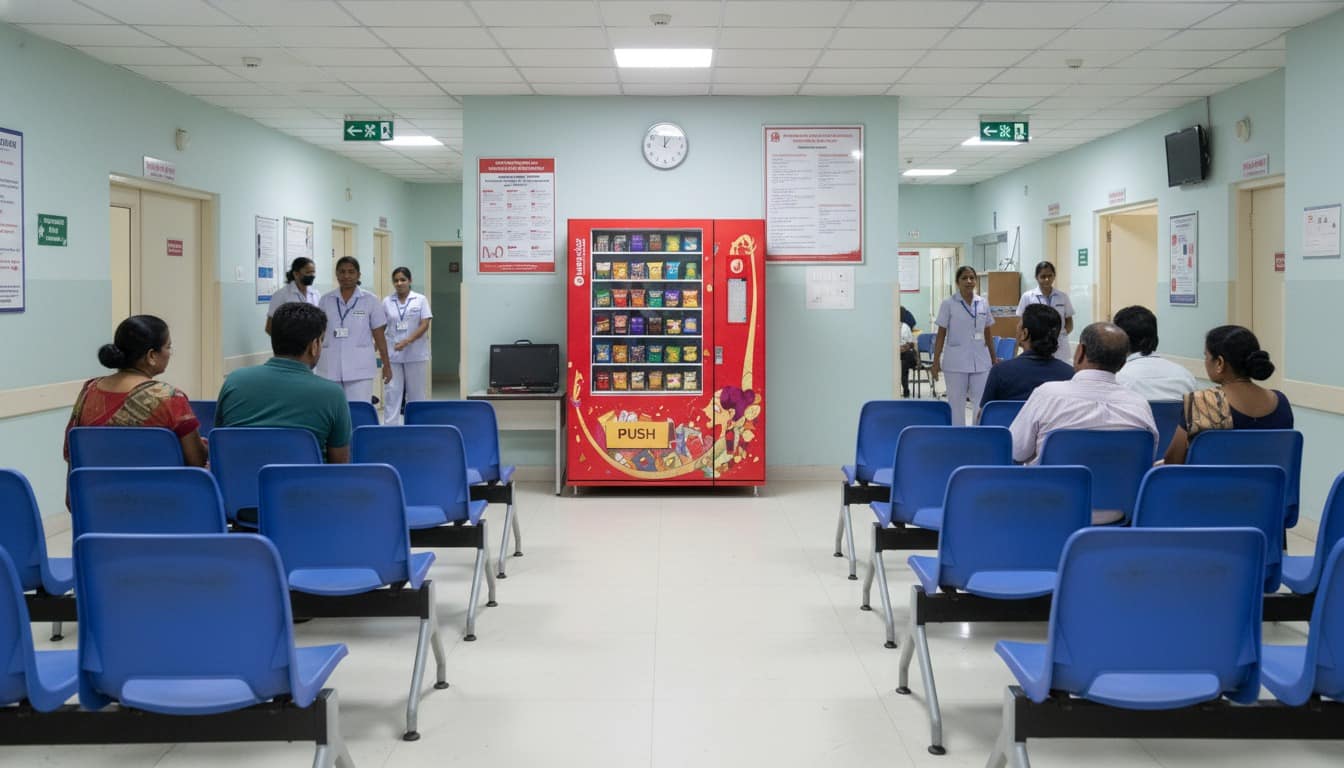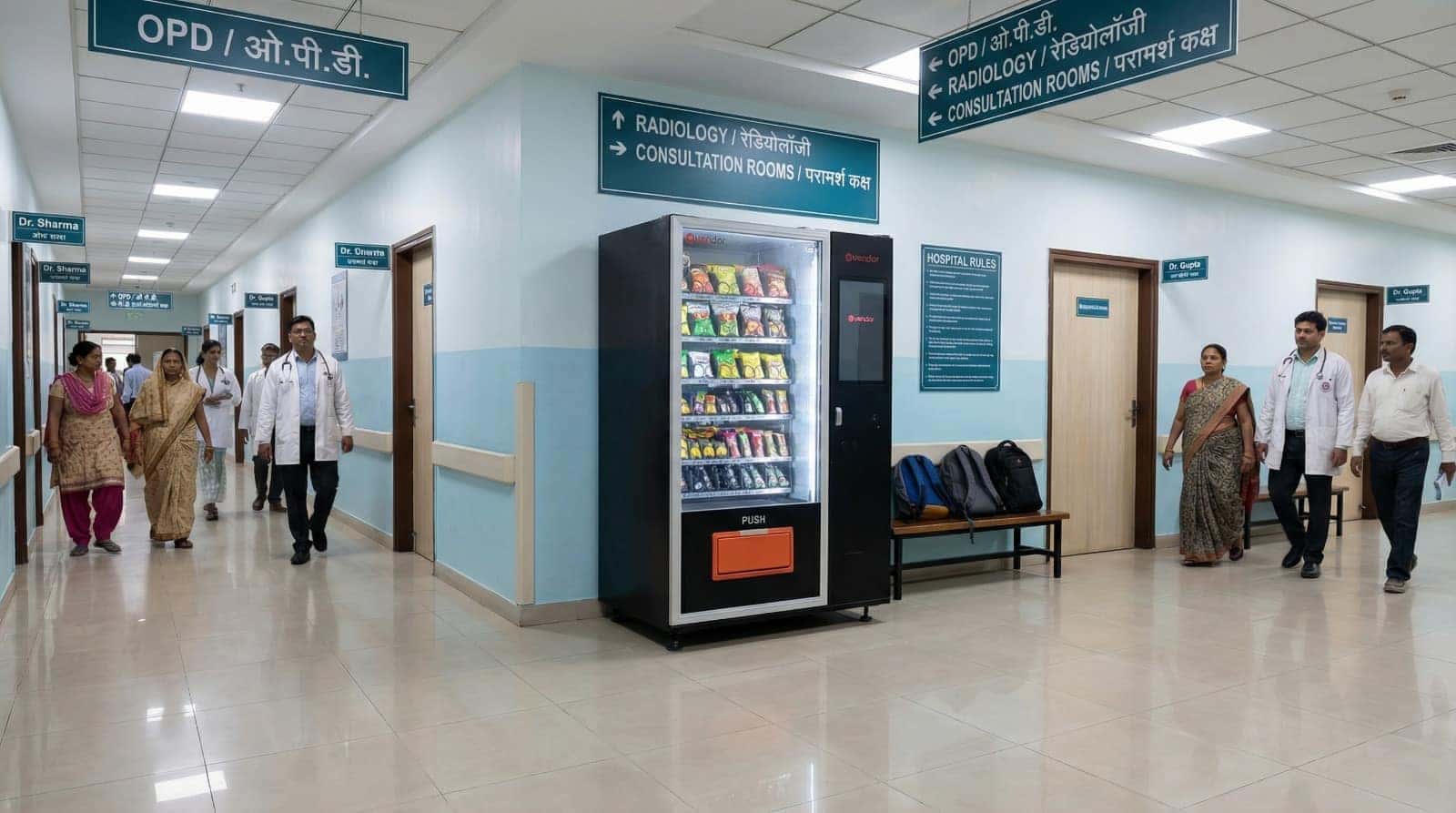







After-hours demand does not stop
Late admissions, emergency visits, overnight monitoring, and long family waiting times create real demand even when cafeterias, kiosks, or nearby retail are shut.
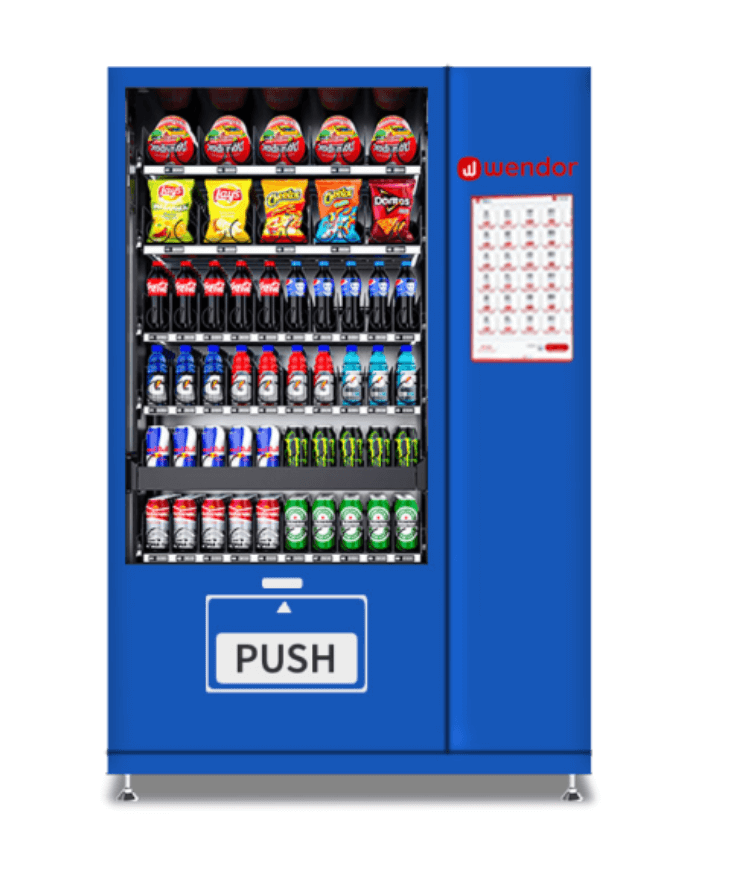
Healthcare vending systems
Wendor helps hospitals, clinics, and specialty care environments add a cashless convenience layer for staff, attendants, and visitors with cleaner machine presentation, controlled product mix, and better visibility for stocking and service.
Best fit
Hospitals, clinics, diagnostic centres, and specialist care environments
Typical mix
Water, packaged snacks, beverages, quick refreshments, and facility-approved essentials
Operating focus
Reliable access, cleaner presentation, and visibility into stocking and service
Healthcare operating pain
Healthcare environments do not move on a simple retail schedule. Attendants wait for long stretches, clinicians work through nights and irregular shifts, and cafeteria or canteen timings do not always match when food, water, or basic essentials are actually needed.
Late admissions, emergency visits, overnight monitoring, and long family waiting times create real demand even when cafeterias, kiosks, or nearby retail are shut.
In hospitals, people usually want fast access to dependable basics, not a complicated retail journey or a search across multiple counters.
Nurses, technicians, support teams, and junior doctors often need something quick between tasks, especially during nights, weekends, and extended shifts.
A healthcare machine has to feel clean, controlled, and intentionally placed. If it looks cluttered or poorly maintained, it can damage service perception immediately.
What healthcare buyers usually worry about
The decision is rarely about adding one more snack point. It is about whether the machine can support a sensitive environment without creating hygiene concerns, category confusion, or maintenance burden for the facility team.
Why Wendor fits healthcare
Wendor positions healthcare vending around environment sensitivity, disciplined assortment, and practical machine oversight. That means choosing categories that suit the site, keeping the machine presentation calm and clean, supporting cashless purchases, and making stocking or service requirements visible enough for the facility team to stay confident.
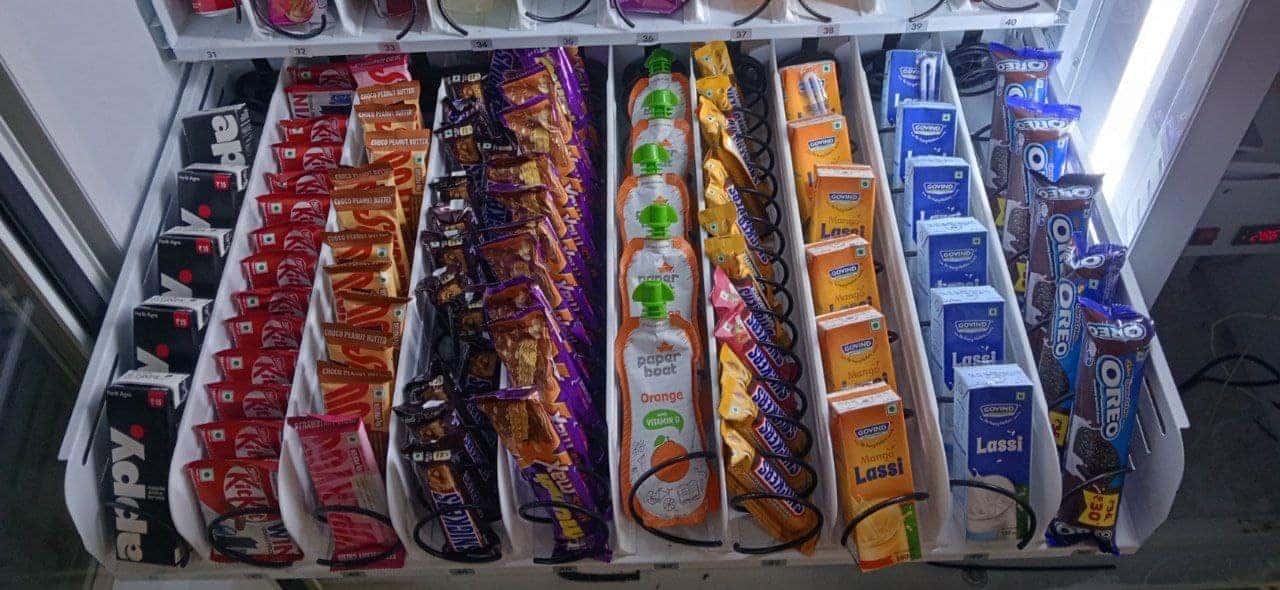
Hospitals and clinics usually need a tighter assortment: water, packaged snacks, tea or coffee-led beverages, and carefully chosen essentials such as tissues, masks, sanitizers, or other facility-approved items.
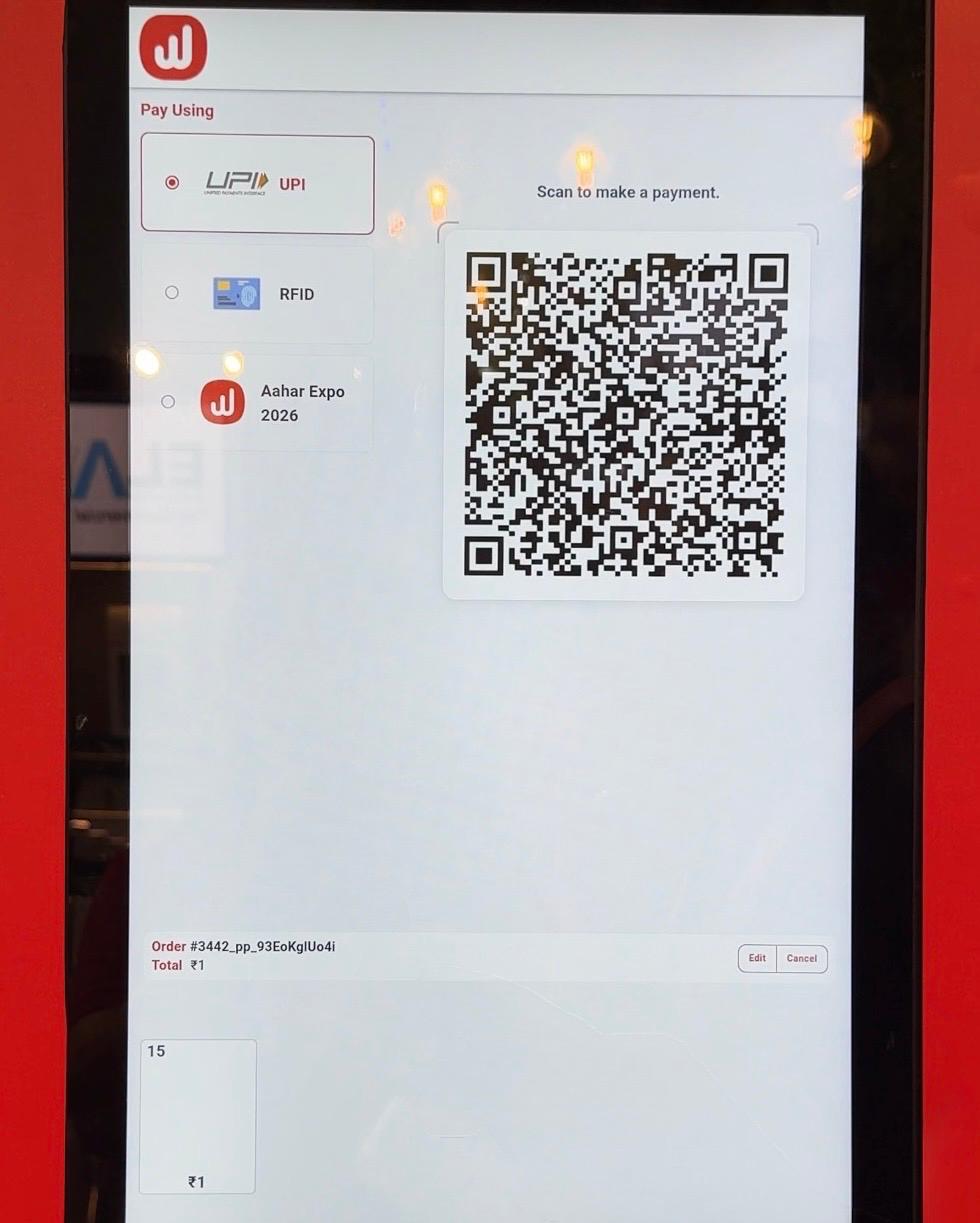
Digital payments reduce friction for visitors and staff who need something quickly, while a modern interface keeps the interaction straightforward in a high-stress setting.
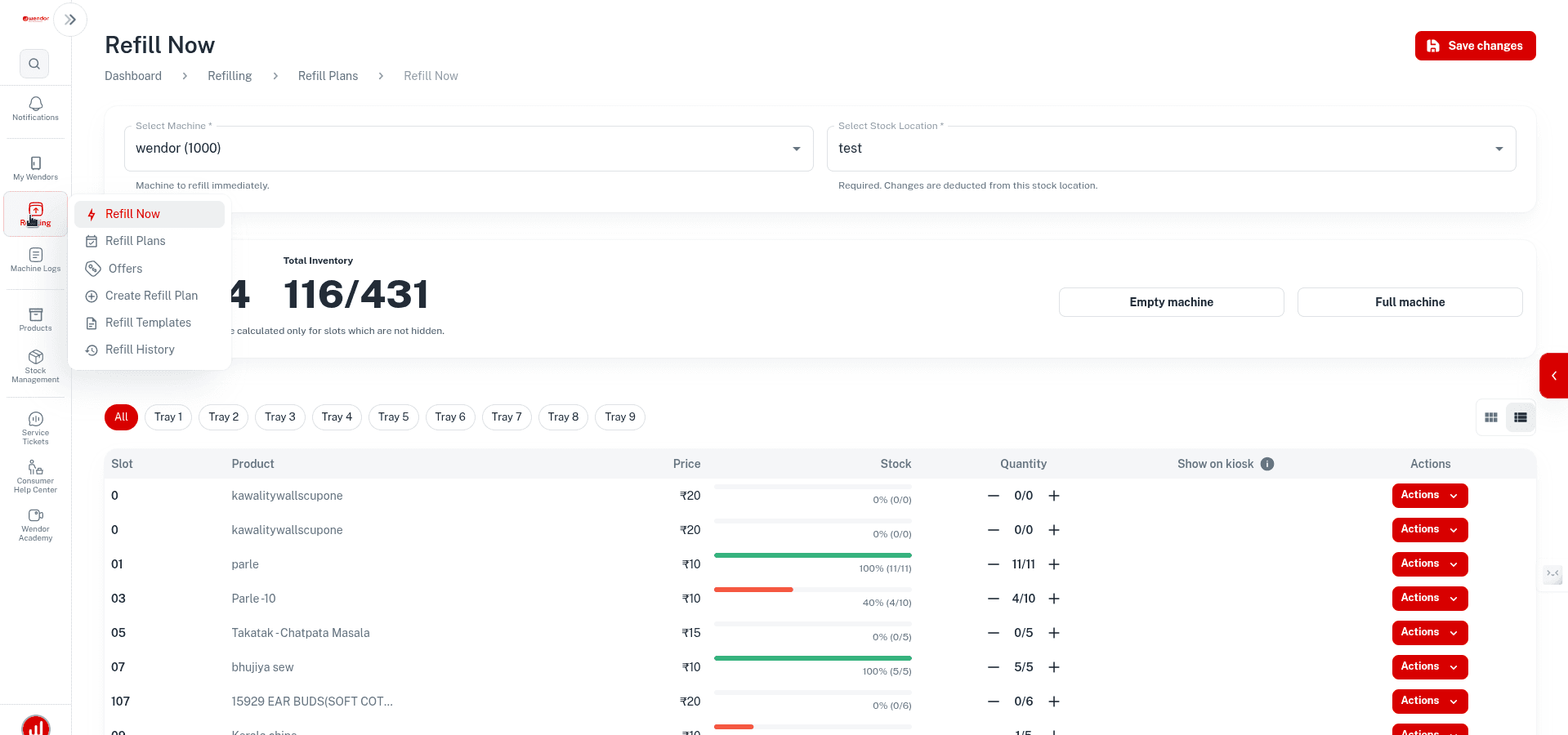
A better operating layer helps the team monitor what is moving, where refills are needed, and when the machine needs attention before it becomes a site issue.
Machine range
Compare the current machine lineup to decide which format suits your lobby, waiting area, or staff zone.
Explore route
Healthcare enquiries
Share your hospital or clinic use case directly with the team if you need help planning the right environment and category mix.
Explore route
Cashless context
See how Wendor talks about contactless and digital machine interactions in broader vending environments.
Explore route
Water access
Review Wendor’s water-vending context if hydration access is part of the healthcare deployment conversation.
Explore route
Visitor-facing
Best for broad access to water, packaged beverages, snacks, and fast-purchase basics for visitors and attendants.
Shift support
Useful when nurses, technicians, and support teams need nearby refreshments during busy or irregular shifts.
Long dwell time
Helps family members and caregivers access dependable basics without leaving the building or depending on limited counter timings.
Compact deployment
A smaller, cleaner setup can support outpatient clinics and diagnostic centres that want controlled self-service without a heavy retail footprint.
Deployment patterns
Wendor starts with the actual access gap. Some hospitals need visitor and attendant support near waiting zones. Others need a staff-oriented machine near back-of-house areas or on floors where long shifts make food access harder. The strongest deployment usually comes from mapping demand and environment sensitivity before deciding product categories.
Outcomes and proof
The strongest result is a more dependable convenience layer for people who are already operating under time pressure or emotional stress. When the machine is placed well and the assortment is disciplined, hospitals and clinics can support visitors, attendants, and staff with less friction and a more organized service feel.
Visitors, attendants, and overnight teams can still get water, snacks, or basic necessities when canteens and nearby retail are unavailable.
A well-presented machine can make the hospital feel better equipped and more responsive without adding another manned counter.
People spend less time searching for basic refreshments or leaving the building in the middle of already stressful schedules.
Facilities teams gain a clearer way to monitor stocking and service quality than with loosely managed ad hoc refreshment arrangements.
Operating reality
This page is grounded in an observable hospital pattern rather than a speculative market statistic. Official visitor pages from UPMC and Porter Medical Center both describe 24/7 vending supporting patients, visitors, and waiting areas when cafeterias are closed, while peer-reviewed reviews of hospital food environments show night-shift staff often face limited cafeteria access and rely on whatever is nearby. The practical implication is clear: round-the-clock access matters, but the machine has to be managed with more discipline than a generic junk-food vending setup.
FAQ
The most appropriate healthcare assortment usually focuses on packaged snacks, bottled water, ready-to-drink beverages, tea or coffee-led refreshment, and selected convenience items such as tissues, masks, sanitizers, or other facility-approved essentials. The exact mix should reflect the environment and who uses it most.
Hospitals operate beyond normal meal-service timing. Emergency visits, overnight stays, long waiting periods, and shift-based work mean demand continues even when cafeterias, cafés, or nearby shops are unavailable.
Yes, especially for larger clinics, speciality centres, and diagnostic environments where patients or attendants may wait for long periods and staff still need convenient access to refreshments during the day.
Hygiene-led essentials can be appropriate when they are packaged, clearly understood, and aligned with the facility’s policy. If a buyer wants OTC-adjacent items, that decision should be handled cautiously and reviewed against the site’s internal rules and any applicable regulatory requirements rather than treated as a default vending category.
Healthcare buyers usually want a service model that keeps the machine clean in appearance, disciplined in assortment, and predictable in refill timing. In practice, that means planned stocking, clear service ownership, and enough visibility into machine status that issues can be addressed before they become a patient-facing problem.
A cashless-first setup is usually the most practical because it keeps the purchase quick for attendants and staff. In India, UPI is especially important, and additional digital payment options can support visitors who want a straightforward transaction without depending on cash availability.
Planning a healthcare deployment?
Share your site type, target users, and the access gaps you want to solve. We will help map a healthcare-appropriate vending setup with the right operating logic behind it.